Chaplet of Our Lady of Sorrows
Chaplet of Our Lady of Sorrows
A simple way to walk with Mary in her sorrows, one bead at a time, especially on the days when your own heart feels heavy.
For many of us, the Chaplet of Our Lady of Sorrows is not something loud or dramatic. It is a quiet companion. It rests on a nightstand, in a pocket, or beside a well‑used Bible, waiting for the moments when we need to pause and remember that Mary understands grief, confusion, and unanswered questions more than anyone.
I still remember the first time I prayed this chaplet during a difficult season in my family. I did not know what to say to God, and my regular prayers felt dry and scattered. Holding the beads of the Chaplet of Our Lady of Sorrows gave my hands something simple to do, and the prayers gently led my heart back toward trust, without forcing any feelings or big emotions.
Over time, this chaplet has become a kind of steady rhythm for many Catholics: a way to reflect on Mary’s seven sorrows, to offer our own struggles quietly, and to stay close to Jesus through His Mother’s experience. It is not about saying the “right” words, and it is certainly not about collecting devotions. It is just one more humble way to pray, especially when words are hard to find.

What the Chaplet of Our Lady of Sorrows Really Is
The Chaplet of Our Lady of Sorrows is a set of beads used to meditate on the seven main sorrows Mary lived through during the life, passion, and death of Jesus. It is sometimes called the Seven Sorrows Rosary, but it has its own structure and a very gentle rhythm. You do not need to be an expert in prayer to use it. You simply hold each bead and move slowly through the prayers, letting Mary’s story meet your own.
The chaplet typically has seven groups of seven beads, each group honoring one of Mary’s sorrows. Between these groups, there are usually separating beads and a small medal or crucifix. Many Catholics keep it near them for particular intentions: for their children, for those who are suffering, for the dying, or for their own hidden wounds that do not always show on the outside.
From a historical point of view, this devotion has roots that reach back centuries. If you are curious about the broader background of Mary’s sorrows in Christian tradition, the article on the Seven Sorrows of Mary offers a thoughtful overview.
In daily life, though, the Chaplet of Our Lady of Sorrows often feels much simpler than all of that. It is just you, some beads, and a few short prayers, praying in a quiet corner of your home, in your car before going inside after a long day, or while you walk alone in the evening.
How This Chaplet Fits into Everyday Catholic Life
Many American Catholics already pray the Rosary or have favorite novenas. The Chaplet of Our Lady of Sorrows does not replace any of that. It simply offers a different doorway into prayer, especially when you are carrying something heavy that you do not know how to name.
Some people pray this chaplet on Fridays, during Lent, or on the feast days connected to Our Lady of Sorrows. Others keep it for particular times: after a loss, during illness, or when walking with a child or spouse through something painful. It can be prayed slowly over the course of a day, picking it up and putting it down when needed, or all at once in a single sitting.
In my own routine, the Chaplet of Our Lady of Sorrows most often comes out late in the evening. When the house is finally quiet, I sometimes sit on the edge of the bed with the chaplet in my hands. I think of Mary holding Jesus’ body, or standing beneath the cross, and I quietly hand over whatever is weighing on my heart that day. No big speeches, no special feelings—just being present with her.
If you are trying to grow in prayer but feel overwhelmed by too many devotions, this chaplet can be kept very simple:
- Use it when you cannot focus on longer prayers.
- Offer each sorrow for someone specific in your life.
- Carry it with you to medical appointments, funerals, or visits to someone who is suffering.
- Pray only one “sorrow” at a time if your day is busy.
- Let the beads remind you that you are not walking through pain alone.
Nothing about this devotion demands perfection. If you lose your place, forget a prayer, or get distracted, you can simply begin again. Mary’s sorrows are not tidy, and neither are our lives.
Looking at a Physical Chaplet of Our Lady of Sorrows
While you can certainly meditate on Mary’s sorrows without any object at all, a physical chaplet helps many of us stay grounded. Having real beads to hold can turn an abstract idea into something more concrete and personal.




When I first received a Chaplet of Our Lady of Sorrows, I noticed how the design itself almost invited silence: darker beads, a small image of Mary, and a sense of seriousness without gloom. It felt like something meant to be prayed with slowly, not rushed. Over time, the beads have passed through my fingers so many times that a few edges have softened. Somehow, that feels right for a devotion centered on sorrow and love.
Choosing a chaplet is not about appearance in a showy way, but about finding something that your hands feel at home with. Some people prefer lighter beads, others darker; some like metal medals, others wood or simple images. The important part is that the chaplet is sturdy enough for regular use and comfortable enough that you do not mind picking it up on a hard day.
Praying Step by Step with the Chaplet of Our Lady of Sorrows
Every family and individual may have slight variations in how they pray this chaplet, and that is fine. There is a traditional structure, but the heart of it is reflection on the seven sorrows themselves. Here is a simple way many Catholics use:
- Begin with the sign of the Cross. Take a quiet breath, and simply invite God into this moment, however it finds you.
- On the first bead or medal, you may express your intention for the chaplet—for example, for someone who is suffering, for your own healing, or for the Church.
- Announce the first sorrow, such as the prophecy of Simeon, and pause to imagine Mary’s experience in that moment.
- Pray the set of seven beads for that sorrow, usually using a short repeated prayer honoring Our Lady of Sorrows or recalling her union with Jesus.
- Move to the next sorrow and repeat, slowly working your way through all seven.
- End with a simple prayer of gratitude or trust, even if it is only, “Mary, stay with me here.”
When I use the Chaplet of Our Lady of Sorrows, I often find that certain sorrows feel closer to my life at different times. For example, during a period when someone I love drifted away from the faith, I found myself lingering with the sorrow of Mary losing Jesus in the Temple. When dealing with illness, I stayed longer under the cross with her. The chaplet seems to change as our lives change, even though the prayers stay the same.
It is important to remember that this is not a magic formula. The purpose is not to force tears or produce some dramatic spiritual experience. It is to be near Mary as she is near Jesus, and to let that nearness gently shape the way we carry our own sorrows.
Using the Chaplet of Our Lady of Sorrows in Family and Community
The Chaplet of Our Lady of Sorrows can also have a place beyond personal prayer. Some families pray it together during times of grief, especially around anniversaries of death or other painful milestones. Others bring it out during Lent as a way to prepare for Holy Week, allowing older children and teenagers to engage with Mary’s story in a concrete way.
In some parishes, small prayer groups gather to meditate on Mary’s sorrows with this chaplet, especially on September 15, the feast of Our Lady of Sorrows. Even if your parish does not have that tradition, you can quietly begin with a friend or two, sharing intentions and then praying a single sorrow together rather than the entire chaplet.
For people who serve in ministries—like hospital visits, grief support, or prison outreach—the chaplet can be a discreet companion. It can be held in the pocket while listening to someone’s story, then prayed later as a way of entrusting what you have heard to God through Mary’s intercession. In that sense, the beads almost become a silent notebook of the burdens people carry.
One small personal habit I have is to keep the Chaplet of Our Lady of Sorrows in my bag when traveling to funerals or wakes. I usually do not pray it visibly, but knowing it is there helps me remember to keep the family and the deceased in prayer not only that day, but also in the weeks that follow, when the quiet after the funeral can feel especially heavy.
Details and Craftsmanship That Support Prayer
While prayer is always more important than appearance, the way a chaplet is made can support or distract from prayer. Thoughtful details—like the weight of the beads, the feel of the chain, and the clarity of the medal—can make it easier to use regularly.
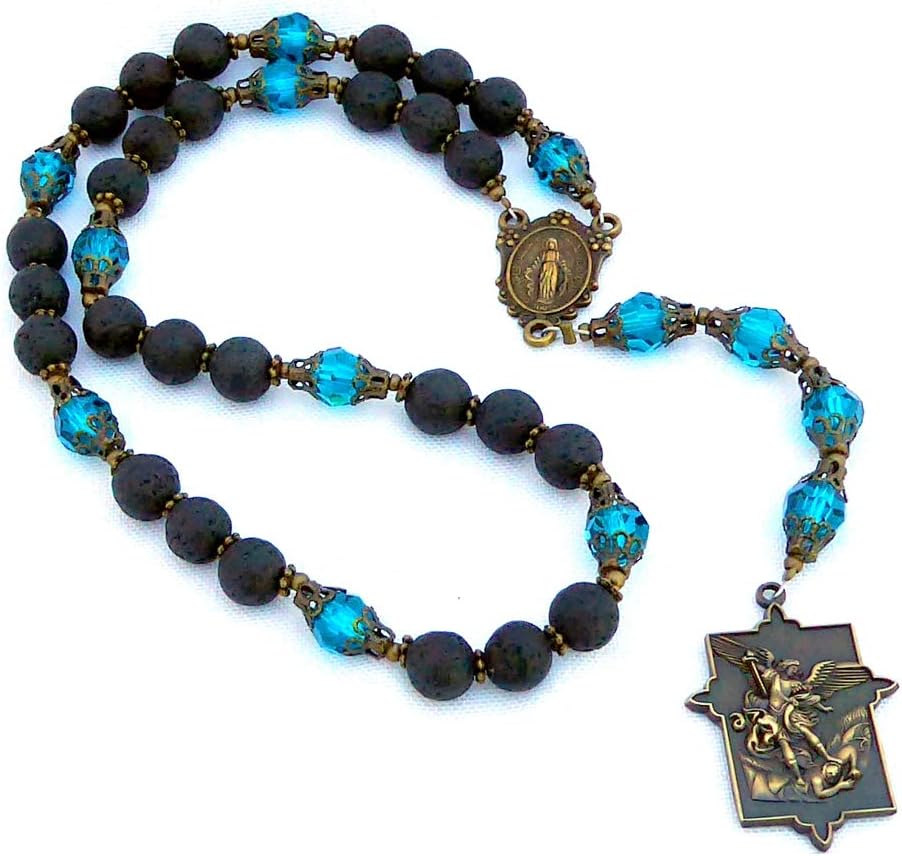


Some things you might quietly pay attention to when you consider a Chaplet of Our Lady of Sorrows:
- Bead size: Larger beads can be easier for older hands or for praying in the dark; smaller beads may feel lighter in a pocket or purse.
- Material: Glass, wood, metal, or stone each have a different weight and warmth. Some people find that a cooler or warmer feel matters to them in prayer.
- Medals and images: A clear image of Our Lady of Sorrows or of the Crucifixion can gently draw your attention back to prayer when your mind wanders.
- Durability: If you plan to carry the chaplet daily, sturdy links and solid construction help it hold up over time.
- Color: Darker colors often feel fitting for a sorrow-focused devotion, but any color that encourages you to pray quietly can work.
Over the years, I have learned not to worry too much about having the “perfect” chaplet. What matters more is whether it helps me turn my heart toward God in the ordinary moments of life—on the couch after a long day, in the car waiting to pick up a child, or lying awake at 2 a.m. when worries feel louder than usual.
FAQ about the Chaplet of Our Lady of Sorrows
If you feel a gentle pull toward this devotion, taking a closer look at different ways the Chaplet of Our Lady of Sorrows is made might help you choose one that fits naturally into your own way of praying.
Let me see more options