Chaplet Rosaries
Chaplet rosaries sit quietly in the hand, bead by bead, helping the heart slow down and turn toward God. They are smaller than a full rosary, but they carry a lot of meaning, memories, and gentle encouragement for daily prayer.

This page contains affiliate links. If you click and buy, I may earn a commission at no extra cost to you.
What Chaplet Rosaries Mean In Ordinary Life
For many Catholics in the United States, chaplet rosaries are a small, steady companion. They fit into pockets, purses, glove boxes, and desk drawers. They show up in hospital rooms, on nightstands, and in the hands of people standing in line or sitting in waiting rooms.
A chaplet rosary is usually dedicated to a particular devotion: the Sacred Heart, the Divine Mercy, a favorite saint, or a mystery of the Lord’s life. It does not replace the regular rosary. Instead, it offers another path to recollection, especially when the mind and heart need something simple and focused.
In my own life, chaplet rosaries have become part of the “in between” moments: walking the dog, waiting for a child to finish practice, or winding down at the end of the day. I do not finish every chaplet I start, and I do not always feel especially prayerful. But holding the beads reminds me that God is present in the ordinary places where I spend most of my time.
Historically, **rosaries and chaplets** have helped Christians pray with their hands while the mind slowly turns toward God. That same simplicity still works today, even in a busy, distracted world.
How Chaplet Rosaries Fit Into Daily Prayer
Chaplet rosaries are flexible. They do not demand a special time or place. Instead, they quietly adapt to the rhythm of your life. Some people set aside a regular time each evening. Others reach for a chaplet whenever a particular need or concern comes to mind.
Over the years, I have noticed that certain chaplets seem to “belong” to certain seasons of life. During a time of illness in my family, I found myself drawn again and again to a Divine Mercy chaplet rosary. During quieter years, a chaplet of the Holy Spirit helped me ask for guidance when decisions were unclear.
You do not have to feel holy or prepared to pick up a chaplet. Many days, I simply start with a slow sign of the cross and one honest sentence to God, such as, “Lord, you know how today feels; please walk with me through it.” Then the beads slowly move through my fingers, one prayer at a time.
In a culture that prizes speed and productivity, chaplet rosaries ask for something much smaller: a few unhurried minutes, a gentle focus, and a willingness to be present to God as you are.

Different Types Of Chaplet Rosaries
When people talk about chaplet rosaries, they often mean several different things. Some are short versions of the rosary, while others are unique devotions with their own structure and prayers. Here are a few common types you may see:
1. Divine Mercy Chaplet Rosaries
The Divine Mercy chaplet is usually prayed on a standard rosary, but many people use a dedicated chaplet rosary as a reminder of this specific devotion. The focus is on trusting God’s mercy and bringing the needs of the world to Him in a simple, repetitive way.
I began praying the Divine Mercy chaplet more regularly when a close friend asked for prayers during a difficult medical diagnosis. The familiar rhythm, “For the sake of His sorrowful Passion…,” helped me carry her situation to God when I felt helpless and unsure what else to say.
2. Single-Decade Chaplets
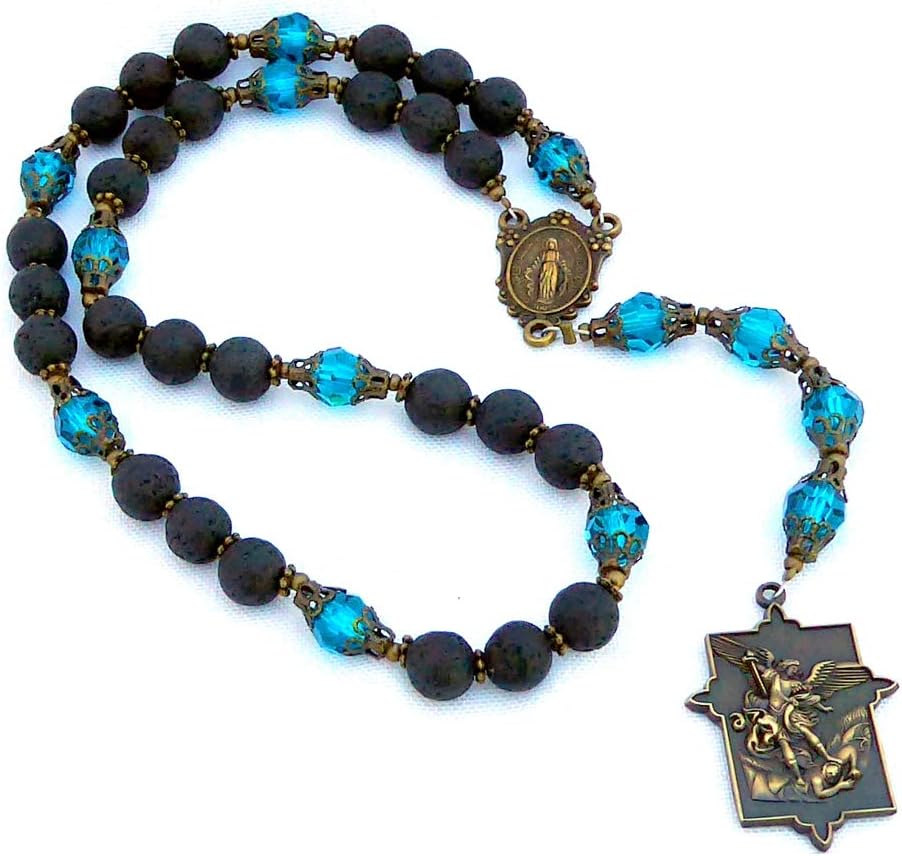
A single-decade chaplet rosary usually has ten beads and a small medal or crucifix. These are especially helpful for people who are new to praying with beads, or for those who prefer short, focused prayers throughout the day rather than one longer time of prayer.
You can pray an Our Father, ten Hail Marys, and a Glory Be, or adapt the decade to a particular intention—perhaps one decade for a sick family member, another for someone who has died, or for peace in a strained relationship.
3. Saint-Specific Chaplets
Some chaplet rosaries are dedicated to a particular saint, with prayers asking for that saint’s intercession and following a traditional pattern. These often have a unique number of beads and a medal with the image of the saint.
Having a chaplet rosary for a favorite saint can feel a bit like keeping a friend nearby. You are not worshiping the saint; you are simply asking a trusted companion in heaven to pray with you and for you, especially in areas where that saint is known to be a special helper.
Choosing A Chaplet Rosary With Intention
Because chaplet rosaries are small and easy to carry, it can be tempting to collect many of them. Still, there is something helpful about choosing one or two with real intention and letting them become familiar companions in your prayer life.
When I first chose a chaplet rosary, I was drawn to one that felt sturdy and simple. The beads were not overly ornate, but they sat well between my fingers and did not tangle. Over time, the wear on the metal and the slight smoothing of the beads became a quiet record of many imperfect, sometimes distracted prayers.
You might think about:
- Which devotion or mystery speaks to you in this season of life.
- Whether you prefer smaller beads or larger, easier-to-grip ones.
- If you need something very durable for pockets, car consoles, or bags.
- Whether a particular saint or image has personal meaning for you.
There is no single “right” chaplet rosary to choose. What matters most is that it gently draws you toward prayer rather than becoming one more thing to feel guilty about. If you forget to use it for a while, you can always pick it up again with a simple, “Lord, here I am,” and begin anew.


Simple Ways To Pray With Chaplet Rosaries
Praying with chaplet rosaries does not have to be complicated. If you are unsure where to start, you can begin with very simple patterns and allow them to grow more familiar over time.
Keeping It Short And Honest
On particularly stressful days, I often pray only one decade on a chaplet rosary. I might quietly repeat, “Jesus, I trust in You,” or “Lord, have mercy,” with each bead. There are times when that is as far as I get, but it is enough to turn my thoughts toward God, even for a little while.
Linking Prayer To Everyday Moments
Many people find it helpful to connect chaplet rosaries with regular daily events:
- Praying a short chaplet while walking in the morning or evening.
- Keeping a chaplet in the car and using it during longer drives.
- Praying a decade before bed as a way to hand the day back to God.
- Using a chaplet during a lunch break or a quiet moment at work.
When chaplet rosaries are woven into ordinary routines, prayer stops feeling like one more task and becomes more like breathing—a gentle pause that fits naturally into daily life.
Praying For Others
Chaplet rosaries are also a simple way to remember the needs of others. Sometimes, I will hold a particular person in my mind while I move through the beads, not trying to think of many words, just letting their name rest before God, bead by bead.
Over time, this quiet habit has made me more aware of the people I promised to pray for, not in a pressured way, but as a steady part of life with God.
Caring For Chaplet Rosaries With Reverence
Because chaplet rosaries are used for prayer, it feels natural to treat them with a certain quiet respect. That does not mean they must always be stored in a special place, but it can help to avoid tossing them carelessly into cluttered spaces where they might break or be forgotten.
I often keep one chaplet rosary on my nightstand and another in a small pouch in my bag. When I take them out, I try to handle them gently, not out of superstition, but as a way of remembering the purpose they serve in my life.
Basic care might include:
- Keeping chaplets away from water, perfumes, or lotions that might damage the materials.
- Placing them in a small case or pouch when carrying them in a bag or pocket.
- Checking the links and cords occasionally for signs of wear.
- Setting aside broken chaplets respectfully, rather than throwing them away casually.
Simple habits like these can help chaplet rosaries last longer, so the memories and prayers attached to them can continue for many years.

Chaplet Rosaries In Times Of Difficulty
Difficult seasons often make prayer feel harder, not easier. Fatigue, grief, anxiety, or confusion can leave us with very few words. In those times, chaplet rosaries can quietly hold a place for prayer when the heart is too tired to do much.
I remember sitting in a hospital waiting room during a long surgery for someone I love. I had a small chaplet rosary in my pocket. I did not manage to pray a full devotion, but I slowly passed a few beads between my fingers and repeated a single phrase: “Lord, stay close to us.” It was simple, almost wordless, but it was the best I could offer.
Chaplet rosaries do not guarantee answers or relieve suffering, but they help us stay turned toward God, even when we do not understand what is happening. The small, repeated prayers can feel like breathing out worry and breathing in trust, one bead at a time.
Over time, those small gestures of trust can become a quiet anchor, reminding us that God is present in hospital rooms, funeral homes, kitchens, and offices just as much as in churches.
Chaplet Rosaries In Family And Community Life
Chaplet rosaries can also become a gentle part of family and community life. They do not have to be used in dramatic or highly structured ways. Sometimes, it is enough that children see a parent or grandparent quietly using a chaplet during the day.
In my own family, a small chaplet rosary on the coffee table often starts conversations. Someone will pick it up during a quiet evening and ask how to pray it, or mention a friend who needs prayer. Without planning, a simple moment of prayer can form in the middle of an ordinary weeknight.
In parish groups or prayer circles, chaplet rosaries can serve as a simple, shared devotion—especially for those who might feel nervous about praying aloud. The beads give everyone a pattern to follow together, without pressure to find the right words.
Over years, these small, shared experiences can help build a family or community culture where prayer is seen as natural and accessible, not reserved only for special occasions.


Personal Reflections On Living With Chaplet Rosaries
Looking back, I can see how chaplet rosaries have quietly marked different chapters of my life. One chaplet reminds me of an elderly relative I used to visit in a nursing home. Another carries the memory of evening walks when my children were small and I would pray slowly while they rode their bikes ahead of me.
None of these memories are dramatic. They are woven into the ordinary movements of daily life—school pickups, grocery lines, quiet car rides home. Yet those are the places where faith has slowly taken root for me, bead by bead, decade by decade.
When a chaplet rosary finally wears out or breaks, I sometimes feel a brief sadness, as if saying goodbye to an old friend. But even then, the habit of prayer it helped form remains, ready to continue with another set of beads.
If you feel drawn toward chaplet rosaries, you do not need to have everything figured out in advance. You can start small, with one simple chaplet and one honest prayer, and allow God to work quietly in His own time and way.
Frequently Asked Questions About Chaplet Rosaries
A regular rosary is designed for the traditional set of mysteries and usually has five decades. Chaplet rosaries can be shorter, with one decade or a unique number of beads, and are often connected to a particular devotion, such as the Divine Mercy or a specific saint. Both are used to guide repetitive prayer, but chaplet rosaries are especially suited to shorter moments of prayer throughout the day.
You do not need to have every traditional prayer memorized before you begin. Many people start with the prayers they already know and gradually learn others over time. It is better to begin simply and honestly than to delay prayer until everything feels “perfect.” If you forget a specific wording, you can quietly ask God to receive the intention of your heart as you move through the beads.
Yes. Chaplet rosaries are very portable and are often used at home, in the car, on walks, or during short breaks at work. Many people keep a chaplet in a pocket or bag so it is nearby when a quiet moment appears. Prayer does not have to be limited to formal settings; chaplet rosaries can help bring a sense of God’s presence into everyday spaces.
Distractions are a normal part of prayer. Most people find that thoughts wander, feelings shift, and attention drifts. When that happens, you can gently bring your mind back to the next bead and the next prayer, without harsh self-judgment. Over time, chaplet rosaries can actually help train the heart to return more easily to God when distractions appear.
There is no required number. Some people prefer to keep just one chaplet rosary and become very familiar with it. Others have several, each connected to a different devotion or season of life. It can be helpful to choose chaplets with intention, keeping those that genuinely support your prayer and avoiding the pressure to collect more than you truly use.
If you feel gently drawn to pray with chaplet rosaries, it may be worth taking a quiet look at the different options available and seeing which one fits naturally into your life of faith.