Many of us carry a quiet desire for peace: in our homes, our country, our Church, and inside our own hearts. A Peace Chaplet is a simple way to hold that desire before God, bead by bead, without big words or complicated prayers. It gives the hands something gentle to do while the heart turns toward the Lord.
On this page you will find a reflective look at how a Peace Chaplet can fit into ordinary Catholic life in the United States: in the car before work, on the couch after a long day, or during a restless night. This is not about collecting holy items, but about letting one humble chaplet help you stay faithful to daily prayer when life feels noisy or uncertain.
Praying with a Peace Chaplet in daily life
The first time I picked up a Peace Chaplet, I did not expect much. I already had a rosary I loved, and I worried that adding another set of beads might just distract me. Instead, I found that this small chaplet gave me a simple way to focus on one intention: peace. Not peace in some vague, distant sense, but peace right where I actually live — in my marriage, in our family schedule, and in the quiet fears I rarely say out loud.
A Peace Chaplet does not replace the rosary or the Mass or anything else. It simply becomes another doorway into prayer. Some people like to use it when the full rosary feels too heavy for the moment, or when there are only a few minutes before an appointment or a school pickup. The shorter length can feel approachable, especially on days when the mind is scattered or the body is tired.
I often keep my Peace Chaplet in a jacket pocket. When I feel my thoughts starting to spiral — over work, over the news, or over something small that suddenly feels big — reaching for the beads reminds me that I am not alone with those worries. There is something grounding about feeling each bead between the fingers and quietly offering a simple prayer: “Lord, let Your peace be here,” or “Jesus, I trust You with this.”
This page contains affiliate links. If you click and buy, I may earn a commission at no extra cost to you
Over time, the Peace Chaplet can become tied to particular memories. I still remember one evening when our living room was a mess of toys and unfinished homework, and I slipped the chaplet into my hand almost without thinking. I did not pray anything complicated — just ten simple pleas for peace in our home that night. Nothing dramatic happened, but my own tone softened. I listened a little more carefully. The situation did not magically fix itself, yet something in me settled.
Many Catholics like to connect the Peace Chaplet with certain times of day. Some prefer early morning, before the house wakes up. Others take it on a lunchtime walk, or pray it slowly at night instead of scrolling on their phone. There is no one “right” way. The beauty of a chaplet is that it can adapt to the rhythm of your life and your personality.
If you are new to chaplets in general, it may help to think of the Peace Chaplet as a gentle reminder: each bead is another chance to place something in God’s hands. The structure gives you a small path to walk, but prayer itself remains simple and human — words that are honest, even if they are few.
What the Peace Chaplet has meant in my own routine
Over the years, my relationship with the Peace Chaplet has shifted quietly. At first, it felt like something “extra” — one more devotional practice to remember. I worried I would start with energy and then drop it, the way we often do with new habits. But instead of treating it as a rule, I began to think of it as a small gift I could pick up whenever my heart felt particularly restless.
In certain seasons, I have prayed it every day, usually in the car before walking into work. I would sit for a moment in the parking lot, beads in hand, and ask God to bring peace into the meetings, conversations, and decisions ahead. Other seasons have been quieter, with the Peace Chaplet coming out mainly during times of family tension or when the news felt especially heavy.
One evening stands out in my memory. There had been a difficult conversation in our extended family. No one yelled, but words felt sharp and brittle. That night, I could not sleep. I reached into the drawer where I keep my Peace Chaplet and prayed slowly, bead by bead, for each relative: for patience, for understanding, for the grace to forgive without pretending everything was fine. The situation did not resolve overnight, but that time of prayer softened my own heart and helped me show up differently the next day.
The Peace Chaplet has also helped me pray for places and people I will never meet. Sometimes, when I hear about conflict in another part of the world, I feel powerless. I do not know what to say or do. Having the chaplet nearby gives me something concrete: I can lift those places to God, trusting that He sees what I cannot. I do not need perfect words; the steady passing of the beads is often enough to keep my attention in prayer a little longer.
I have noticed, too, that praying the Peace Chaplet slowly teaches me to breathe more gently. When I am anxious, I tend to hold my breath and rush through Hail Marys or other prayers. With this chaplet, I try to pause slightly between beads, letting each simple prayer settle before moving to the next. That small change has made a difference, especially on nights when sleep is hard to find.
If you decide to use a Peace Chaplet, it may take some time before it feels natural. That is normal. Like any new devotional, it grows familiar when it becomes part of ordinary routines: taken out during a lunch break, kept in the console of the car, or left on a bedside table where you can reach for it in the dark without turning on a light.
Using the Peace Chaplet alongside the Rosary and other prayers
For many Catholics, the first question is how a Peace Chaplet fits with the rosary. It is not meant to compete with or replace the rosary at all. Instead, it usually serves as a shorter, focused devotion that can be set aside for particular intentions. Some people like to dedicate it to peace in their family, others to peace in the world, and others to healing after a specific hurt.
In my own routine, I try to keep the rosary as a steady anchor and use the Peace Chaplet more flexibly. On days when I can pray a full rosary without rushing, I do that and sometimes hold the chaplet later, when I am specifically worried about a situation that needs peace. On days that are especially crowded, the Peace Chaplet sometimes becomes the main structured prayer I can manage, reminding me that prayer does not have to be long to be sincere.
The actual sequence of prayers on a Peace Chaplet can vary depending on the specific design and tradition. Some versions are based on familiar prayers like the Our Father and the Hail Mary. Others might include short invocations for mercy and peace. Whatever the exact pattern, what matters most is the intention with which it is prayed, not the perfection of the formula.
If you already pray the rosary, you might use the Peace Chaplet as a way to “stay a little longer” with one mystery or one intention. For example, after praying the Sorrowful Mysteries, you could quietly take up the chaplet and offer each bead for those who are suffering from violence or fear. It does not need to be dramatic — just a steady offering of trust.
Some families find it helpful to use the Peace Chaplet with children, especially if a full rosary feels too long for their age or attention span. A shorter chaplet gives them something tangible and achievable, while still inviting them into a prayerful rhythm. Simple explanations like “We are asking Jesus to bring His peace into our home tonight” can keep things grounded and clear.
For those who are curious about the broader background of prayer beads in the Catholic tradition, there is a long history of using repeated prayers to keep the heart turned toward God. You can read more about the roots of the rosary tradition and how it developed as a way for ordinary people to stay close to Christ through repeated, meditative prayer.
Design variations of Peace Chaplets
Not all Peace Chaplets look or feel the same. Some have a very simple layout with a small number of beads and a single medal or cross. Others include more decorative elements such as colored beads, different metals, or engraved accents. These variations are not about fashion as much as they are about offering people a chaplet that truly fits their hand and their style of prayer.
A more delicate chaplet with slender beads might tuck easily into a pocket or small purse, making it convenient to carry everywhere. A slightly larger chaplet with more solid beads can be easier to grasp for those with joint pain or limited dexterity. Even the way the chaplet moves between the fingers — how smoothly the beads slide, how much space there is between them — can affect how natural it feels during longer moments of prayer.
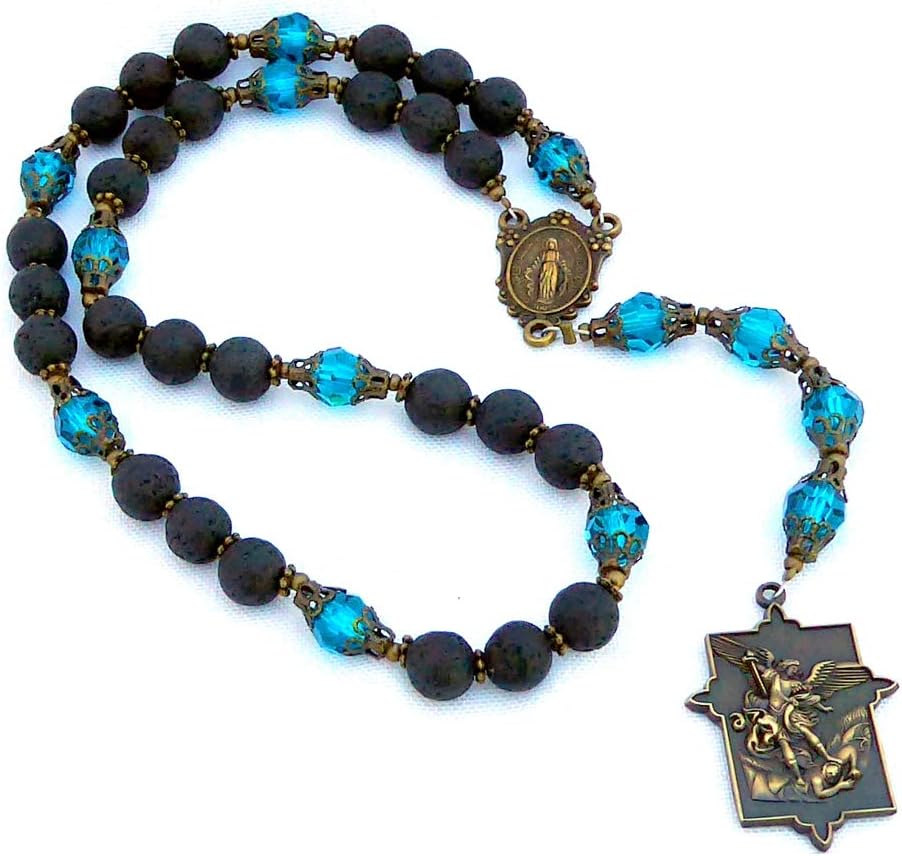
I once had the chance to compare different Peace Chaplets side by side. One had cool glass beads in soft blue tones; another had warm, earthy stone beads with a bit more weight. The glass chaplet felt light and smooth, good for carrying around all day. The stone chaplet felt steady and solid, which made it especially comforting during longer, quiet times of prayer at home. I realized that there is no single “best” design — only the one that gently invites you into prayer.
Metal parts also vary. Some chaplets feature a simple crucifix; others have a small dove or an image of Mary. While these differences might seem small, they can help focus the heart. Looking at a small image of Christ or Mary before beginning the chaplet can be a way to pause and remember Who you are turning to, especially when the day has been rushed or full of noise.
A Peace Chaplet that is well made and sturdy can become something you reach for over many years. Over time, the beads might show a bit of wear, which often makes them feel even more personal. Those little signs of use can be quiet reminders of all the times you carried your need for peace to God, one bead at a time.
Integrating the Peace Chaplet into American Catholic life
In the United States, many Catholics live with a busy mix of work, family, and community responsibilities. Schedules can be full, commutes can be long, and screens are everywhere. In that kind of environment, a Peace Chaplet can become a small, steady reminder that prayer does not have to be complicated to be real.
Some people like to pray the Peace Chaplet while sitting in traffic, waiting to pick up a child from practice, or walking around the neighborhood. Others keep it at their desk and quietly pray a decade during a stressful moment in the workday. The chaplet does not need to be hidden, but it also does not need to draw attention. It can simply be there, a quiet companion.
For me, one of the most meaningful ways to use the Peace Chaplet has been on Sunday afternoons. After Mass and lunch, there is often a bit of a lull before the week’s tasks start pressing in again. On some Sundays, I take out the chaplet and offer it specifically for the coming week: for peace in our home, peace in decisions we have to make, and peace in our parish community. It does not take long, but it helps me begin the week more grounded.
Another natural moment is before bed. When the day has held arguments, misunderstandings, or news that weighs heavily, finishing the day with the Peace Chaplet can be a gentle way to hand those things back to God. It does not erase what happened, but it keeps resentment from having the final word in the heart.
In family life, a Peace Chaplet can sometimes serve as a visible sign that you are turning to God first. I remember one evening when tensions were high and everyone was short-tempered. Instead of trying to fix everyone else, I quietly sat down with my chaplet and prayed for peace in our home. No one said anything about it, but the room slowly grew calmer. I cannot explain exactly how; I only know that my own heart softened, and that made space for others to breathe too.
In the wider American culture, where speed and productivity often dominate, a Peace Chaplet is almost countercultural. It asks you to slow down, even for a few minutes, and to admit that you cannot force peace into being. You can only ask, trust, and stay faithful in small ways. That posture itself can be a quiet witness, especially when others see that your search for peace is rooted in prayer and trust rather than in control.
Because a Peace Chaplet is meant to be used regularly, a little practical care can help it last. It does not require anything elaborate — just a few small habits that respect the chaplet as something set aside for prayer.
Many people like to keep their chaplet in a simple pouch, especially if it is carried in a backpack, purse, or pocket with keys and other items that might snag it. This helps protect the beads and any metal parts from scratches or wear. At home, placing it in a small dish, on a bedside table, or near a favorite prayer corner can make it easy to find and easy to reach for.
If the beads are made of stone or glass, gently wiping them with a soft, dry cloth from time to time can keep them clean. Wooden beads may benefit from being kept away from excessive moisture, so it is wise not to leave a wooden chaplet in a damp car or near a sink. Metal parts can naturally darken over time; many people find that a bit of patina actually adds character rather than taking away from the beauty.
What matters most is not keeping the chaplet pristine; it is letting it serve its purpose. Scratches, softened corners, and slight changes in color can all become reminders of real prayer — of nights you could not sleep, days you felt overwhelmed, and quiet mornings when you chose to turn to God before everything else.
There may be seasons when you use the Peace Chaplet less often. Instead of seeing that as a failure, you can simply leave it in a visible place, ready for when your heart feels drawn back to it. Sometimes a single difficult conversation, a sudden piece of news, or a moment of unexpected gratitude is enough to make you reach for the beads again.
1. How is a Peace Chaplet different from a regular rosary?
A Peace Chaplet is usually shorter and focused on a particular intention, especially peace in the heart, home, Church, or world. A standard rosary follows a more formal structure with five decades and specific mysteries. The chaplet does not replace the rosary; it simply offers a smaller, more focused way to pray, especially when time or energy is limited.
2. When is a good time to pray the Peace Chaplet?
Many people find it helpful in moments of stress or uncertainty: before an important conversation, during a commute, right before bedtime, or when the news feels heavy. Others build it into a daily rhythm, such as praying it each morning for peace in their family or each Sunday for peace in their parish and community.
3. Do I need a special booklet to use the Peace Chaplet?
Some versions of the Peace Chaplet come with a brief guide, but it is not absolutely necessary. Most follow a simple pattern using prayers you may already know, like the Our Father and Hail Mary, combined with short invocations for peace or mercy. If you do not have a guide, you can still hold the beads and pray from the heart, offering each bead for a specific person or situation that needs peace.
4. Can children and teens use a Peace Chaplet?
Yes. A Peace Chaplet can be especially approachable for children and teens because it is shorter and focused. Families sometimes use it in the evening to pray for peace in their home, their school, or among friends. Simple explanations and gentle guidance can help younger ones learn to associate the chaplet with turning to God in times of worry or conflict.
5. What should I look for when choosing a Peace Chaplet?
Consider how it feels in your hand more than how it looks in a picture. Notice the bead size, texture, and weight, as well as the sturdiness of the cord or chain. Think about where you will keep it — in a pocket, on a nightstand, in the car — and choose a design that fits that setting. Most of all, look for a chaplet that quietly invites you to pray and that you can imagine using regularly in your real, everyday life.